
Aiden Mak — AI Product Engineer
About me — ( scroll to read )
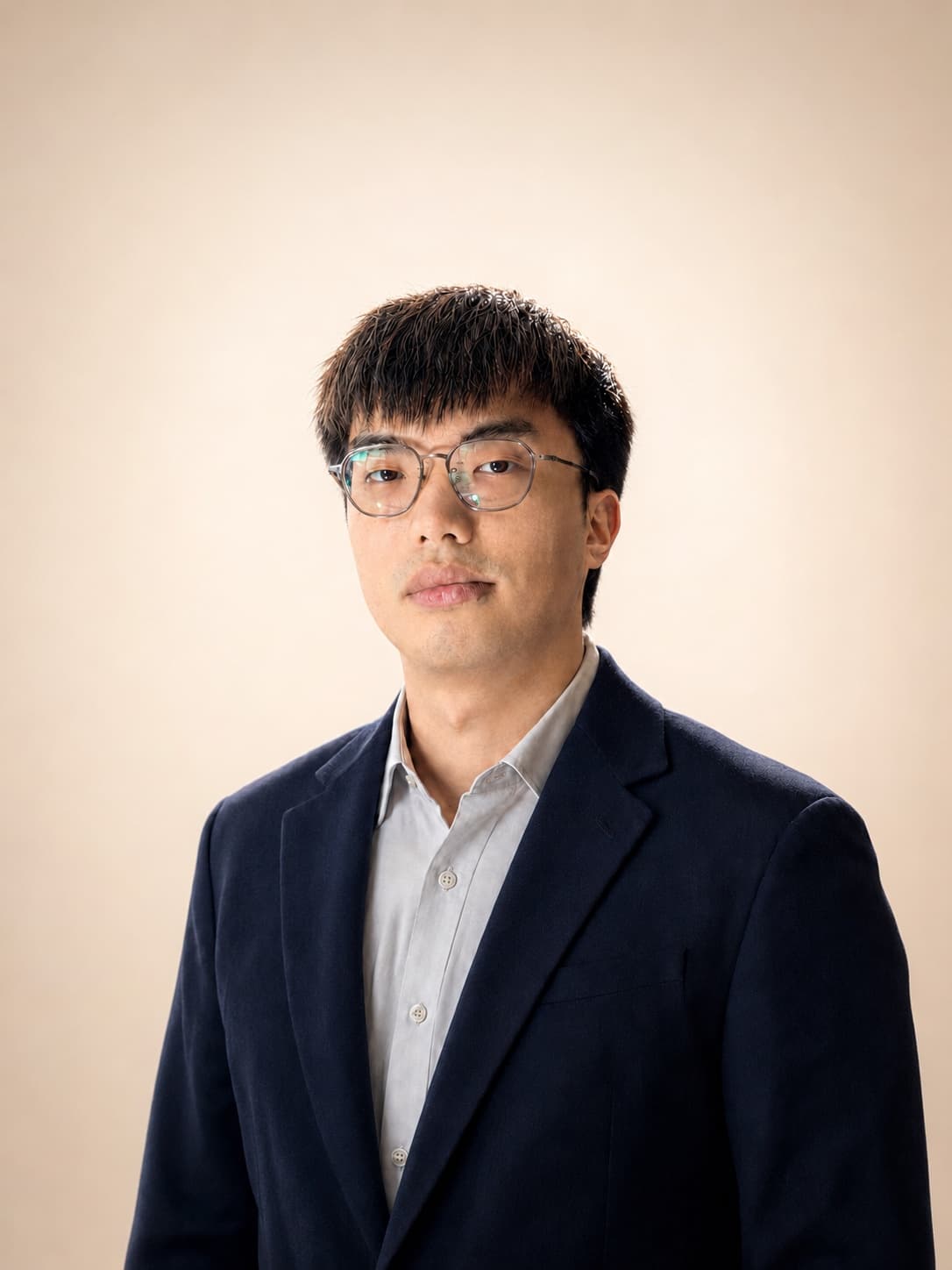
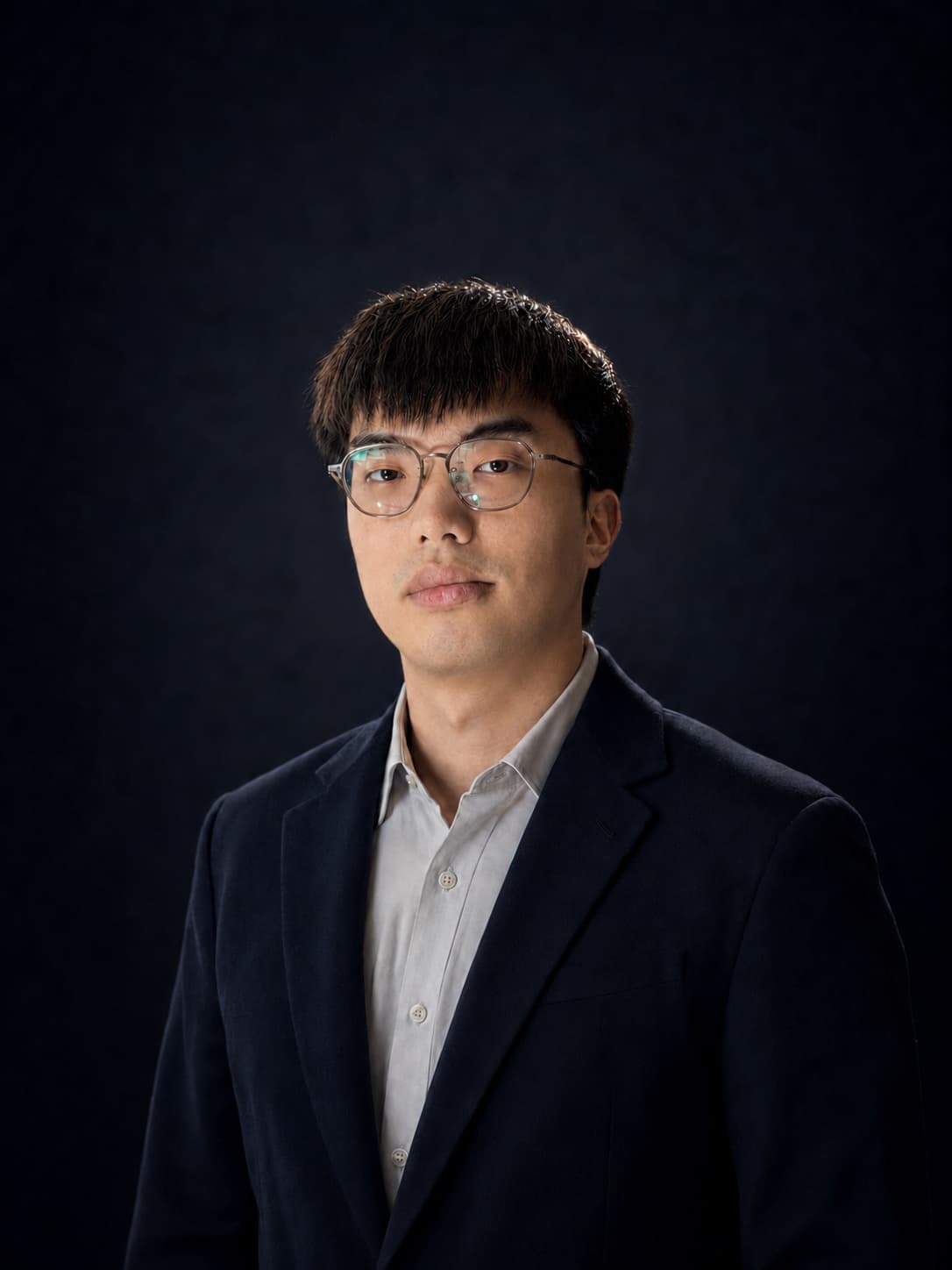
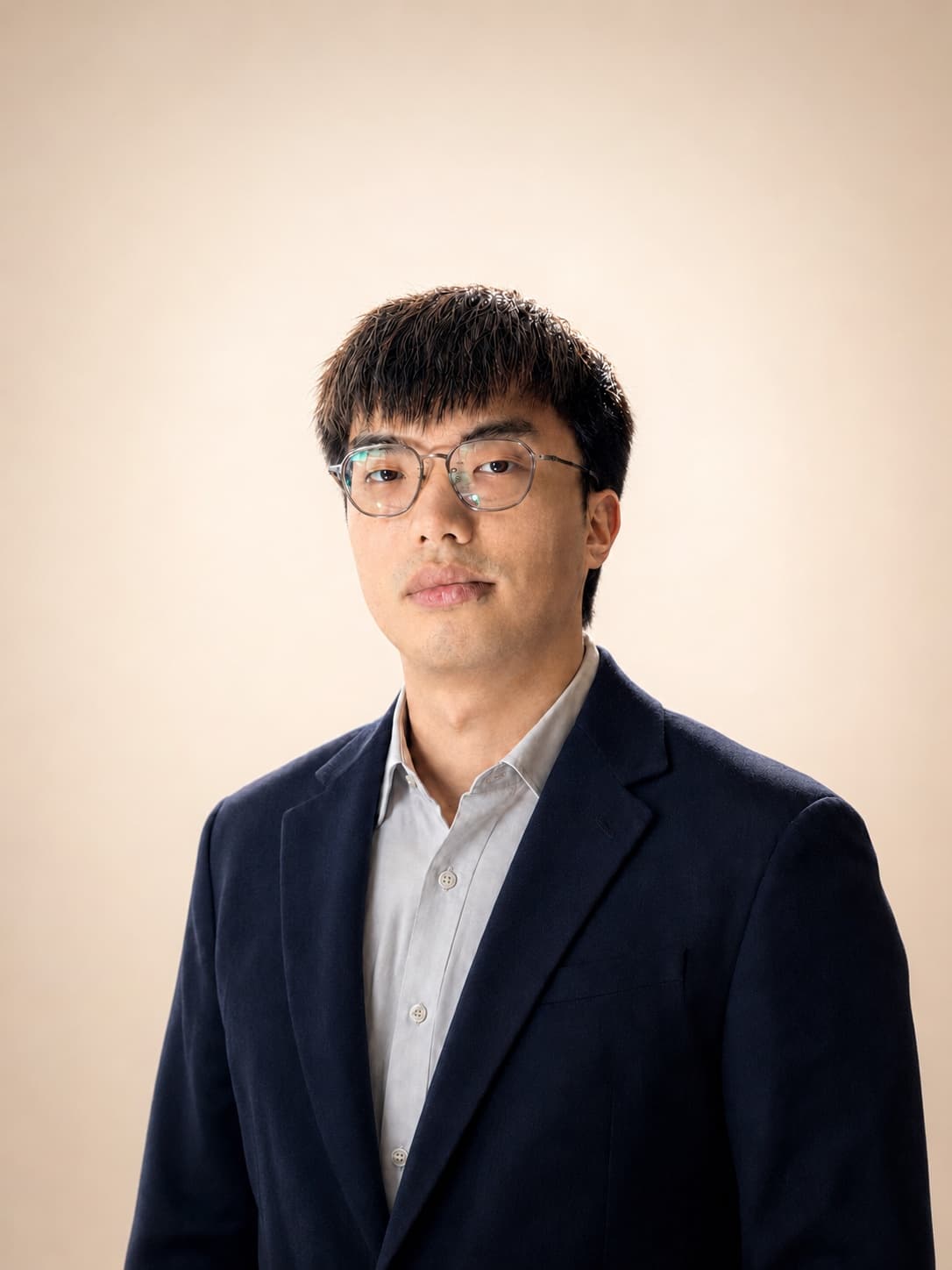
Aiden (Chin Wei) Mak
AI / Full-Stack Engineer
Open to work — Toronto, ON
BuildingIntelligentSystems
Right now I'm an AI Engineering Intern at Zokforce, a Canadian AI consultancy. I test AI products before real users touch them — clinical voice AI among them — and help our clients' products adjust to what the market actually needs.
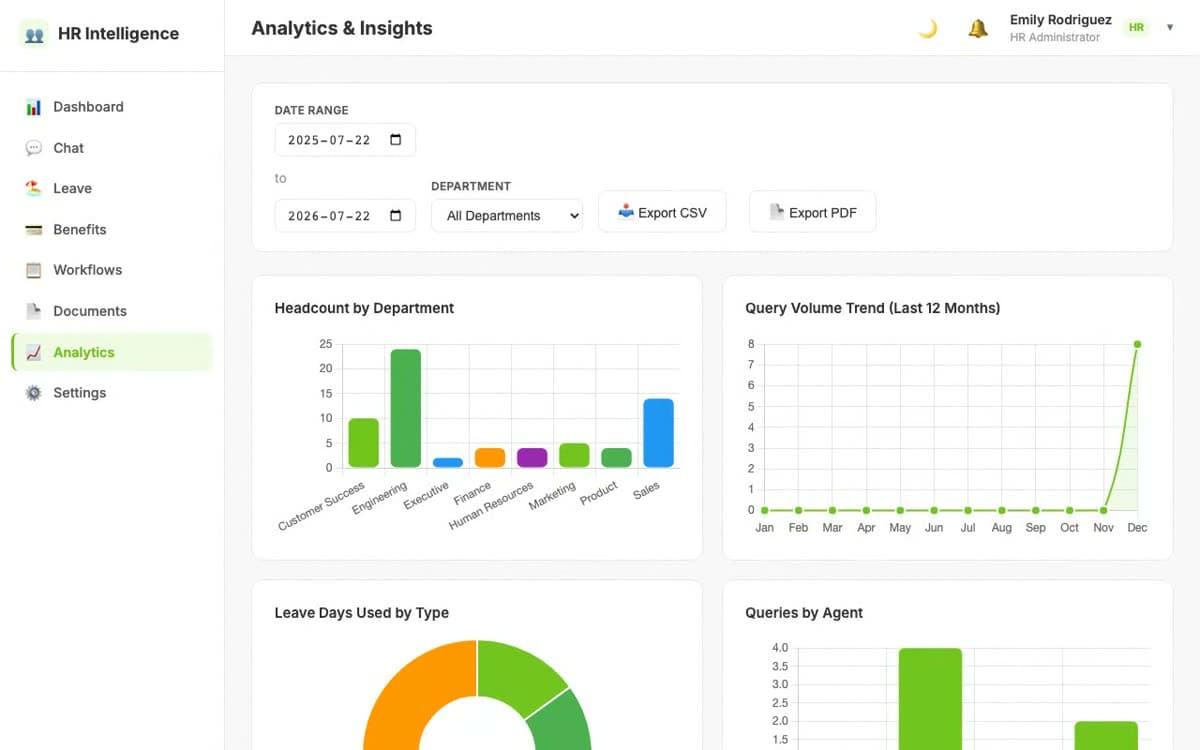
I build and ship AI products. My flagship personal build is the HR Intelligence Platform — an HR system with AI built in. Employees ask questions in plain language and get answers grounded in company policy; routine requests are routed to the right AI helper automatically; managers keep approval and a full record. And it's held to a high bar: 1,909 automated checks run before anything ships.
I'm trilingual — English, Cantonese, Mandarin. What drives me: letting AI take the repetitive work off people's plates without taking away their judgment, and helping teams and small businesses turn messy day-to-day workflows into software they can actually trust.
- Location
- Toronto, ON
- Education
- BSc Honours CS, University of Manitoba (2025)
- Languages
- English · Cantonese · Mandarin
- Status
- Open to work
Technical skills
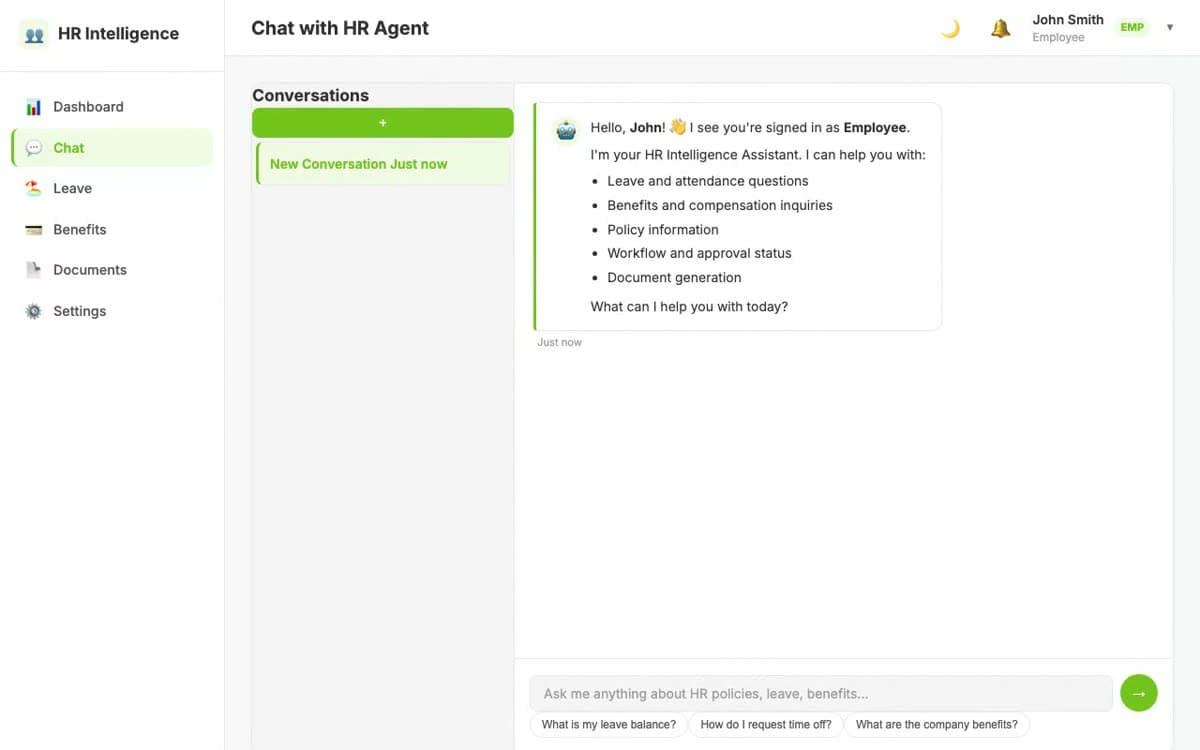
HR Intelligence Platform
Multi-agent HR automation, grounded in policy RAG and MCP tooling.
View case study →
Experience
Education
BSc Honours, Computer Science — University of Manitoba (2025)
2024 – 2025
Developer — Upstander Program · University of Manitoba × Canadian Museum for Human Rights
- Built the Upstander Program chatbot as a University of Manitoba capstone with the Canadian Museum for Human Rights — a web-based guided learning journey (Gemini, Flask, NLP) that walks a visitor from "what is an upstander?" to "what will you do?".
- That capstone inspired my independent follow-up, Human Rights Edu RAG: nine topic reading rooms I organized from a UN/OHCHR PDF corpus, answering over a vector database — later rebuilt as a LangChain multi-agent system (personal project, not affiliated with the museum).
- Learned to design AI for a sensitive educational context, where tone, safety, and human review matter more than technical novelty.
Volunteer Jan 2026 · Intern May 2026 – Present
AI Engineering Intern — UAT / QA · Zokforce (AI Consultancy)
- Provide AI product consulting and AI-architecture feedback.
- Own QA for both products — a government-bid clinical voice-to-notes scribe and an LLM-observability platform. Designed the clinic-simulation mechanism that tests the core business flow end to end, combining manual and AI-automated UAT — cutting a full test pass to a small fraction of its manual-only cost and time.
- Synthesize labeled clinical test audio (clinsim, stt_uat): multi-speaker encounters in five languages, including Cantonese and code-switched Hong Kong clinic speech — and turn the findings into product feedback.
About
My story
I became an engineer right as the AI era took off — and I chose to build in the middle of it. I track new AI capabilities as they land, ship AI products of my own, and work with founders to push new ideas into real use.
What I optimize for is quality: products that are genuinely useful, tested end to end, and shaped around the people using them — interfaces that feel human-made. My strengths sit where product meets intelligence: AI coding across the full stack (frontend, design, databases), AI evals, forward-deployed product work where I own the whole design, and intelligence systems that combine RAG, agents, and conventional software. I'm based in Toronto and open to AI engineering and full-stack roles.
What I'm strong at
Full-Stack AI Development
I build the whole product with my own hands — the interface people touch, the backend behind it, the data underneath — so nothing gets lost in a handoff.
5
AI products built end to end
AI Evaluation & Judgment
Pytest, Playwright and promptfoo evals — plus the judgment that matters in the AI era: knowing where green suites lie. One of those four stories is the bug that slipped past 1,909 green tests.
4
production failure stories, root-caused and published
Forward-Deployed Engineering
Own the whole product design — workflow discovery, interface, AI boundaries — and deploy it inside the client's real working context.
2
client AI products tested and iterated in the field
AI-Crafted Interfaces & Motion
Ink-fill headings, read-along bio, kinetic hero type, the demo reel — production-grade motion shipped at AI speed. Human-feeling is the bar.
100%
of this site's motion designed and built AI-paired
A practical process for making AI useful.
Four steps, one loop.
Find the real problem
Map what people do today, where time is lost, and what a better result looks like.
Design the smallest useful system
Choose the workflow, interfaces, data, and AI responsibilities before choosing every tool.
Prototype the risky parts first
Prototype the uncertain pieces early, including retrieval, model behavior, integration, and user flow.
Deploy, observe, improve
Release with logs, tests, monitoring, documentation, and a clear path for iteration.
AI-generated work can't replace human quality and taste.
Four principles, creating quality.
Unclear requirements are a starting point, not a blocker
When a problem feels unclear, I look for the user workflow, failure modes, and evidence needed for a good decision.
Quality is defined by users, not test suites
AI quality is not just passing tests. It is knowing what behavior matters, how it fails, and who needs to trust it.
Autonomy works when the limits are explicit
Multi-agent systems become useful when routing, tools, memory, retrieval, and fallback behavior are explicit.
Under-claim, then prove
I would rather show the test, the trace, the citation, or the defect log than hide behind impressive language.
AI is my power tool, not my autopilot.
I build with Claude Code and Copilot daily — and I keep the evidence: a written build log of 9 iterations on my flagship platform, the full testing story, and a section on where LLMs hallucinated and how I caught it.
Read the full build log →